A business must make sure that an adequate number of its workers are trained to give first aid, or that its workers can reach an adequate number of other trained people. Safe Work Australia says there should be one first aider for every 50 workers in a low-risk workplace, more as the risk and the distance from help grow, and training that is kept current.
General information, not medical or legal advice. Victoria has its own compliance code on first aid; other jurisdictions apply the model Code only where they have approved it.
The rule
Regulation 42, in two halves
Regulation 42 of the model WHS Regulations covers first aid. Its first half is about equipment and facilities. Its second half is about people: a PCBU at a workplace must ensure “an adequate number of workers are trained to administer first aid at the workplace”, or that workers “have access to an adequate number of other persons who have been trained to administer first aid.”
To decide what is adequate, the PCBU must have regard to all relevant matters, including:
“the nature of the work being carried out at the workplace”
“the nature of the hazards at the workplace”
“the size and location of the workplace”
“the number and composition of the workers and other persons at the workplace.”
Safe Work Australia adds that workers must be able to reach first aid equipment, facilities and trained first aiders “at all times”, including night shifts, overtime and work outside the usual workplace, and that first aiders can be your own workers or other trained people.
How many first aiders
Low risk, such as an officeOne first aider for every 50 workers
High risk, such as a construction siteOne first aider for every 25 workers
Remote and high risk, such as a mineOne first aider for every 10 workers
Safe Work Australia’s recommended ratios and its examples. The bars draw the same ratios as first aiders per 100 workers: 2, 4 and 10.
Refining the number: the Code’s five steps
Safe Work Australia’s model Code of Practice, First aid in the workplace (July 2019), gives the same ratios and a five-step guide for refining them. In its order, and in our words:
Count the peak
Work out the largest number of workers at the workplace at any one time.
Weigh the work
Look at the kind of work done, and decide whether workers face a high risk of hazards that would need first aid straight away.
Check the distance from help
Decide whether the workplace is remote, or hard for emergency services to reach. For a high-risk workplace that cannot get medical and ambulance help in good time, the Code says there should be at least one first aider per 10 workers.
Look at how people work
Consider the different ways your workers do their work: mostly alone or in transit, at changing locations without supervision, or alone for short spells, such as opening up or working late. Where a first aider cannot always be on hand, those workers must still be able to get first aid help, for example through an effective way of reaching emergency services or first aiders, and information, instruction and training on what to do if someone is seriously injured or ill.
Look for reasons to add more
Before settling the number, check for factors that call for more first aiders: shiftwork or overtime, seasonal swings in staff numbers, many other people regularly on site, unusual hazards, and cover for when a first aider is away, such as on annual leave.
Safe Work Australia also recommends a first aid room once a low-risk workplace reaches 200 workers, or a high-risk one reaches 100.
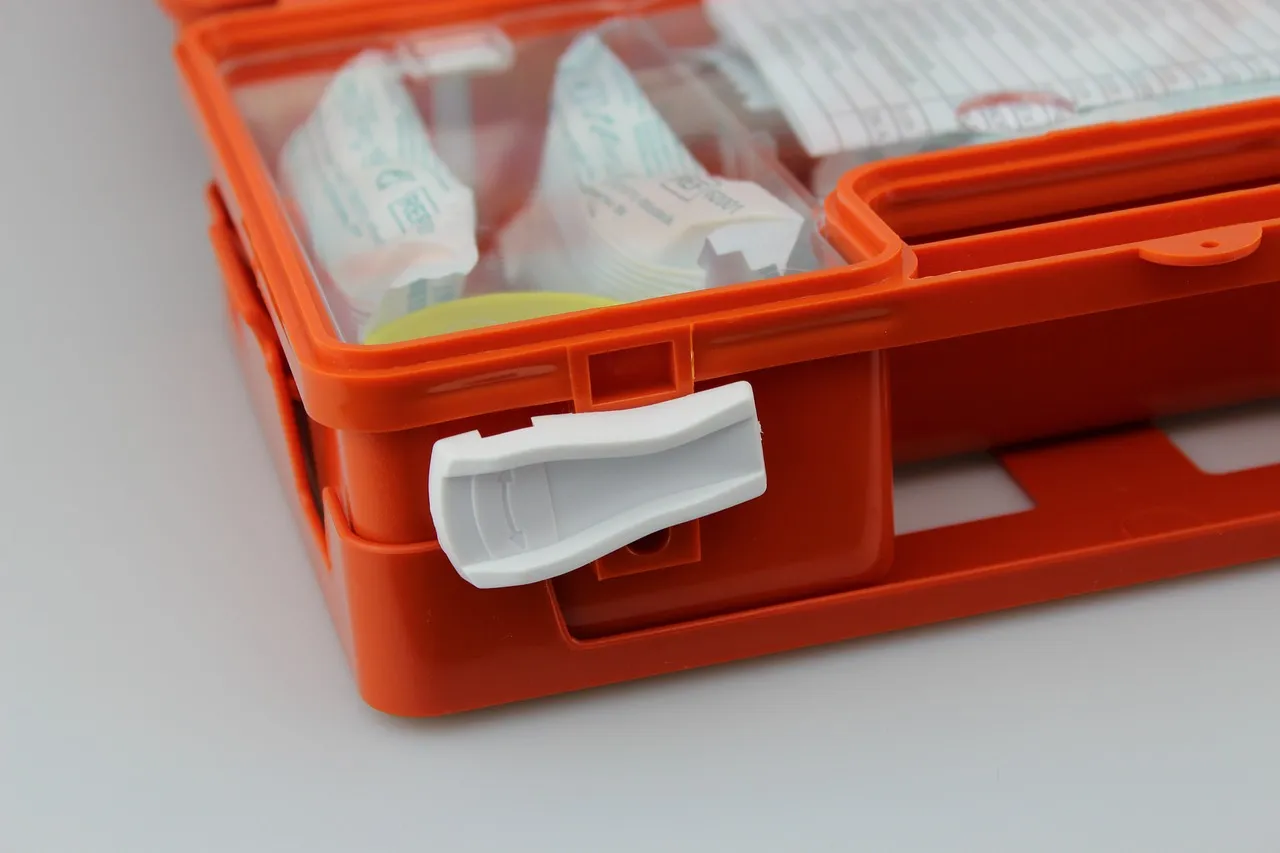
An orange first aid case, its supplies visible through the clear lid. Photo by adexo_medical on Pixabay.
The training
What a first aider should hold
Safe Work Australia says first aiders should “hold a nationally recognised statement of attainment from a registered training organisation” and “attend training regularly to keep knowledge current.” The Code names the minimum: a statement of attainment for the nationally endorsed first aid unit, Provide First Aid, or a course giving equivalent skills, with higher or extra training where the workplace’s risks call for it.
Safe Work Australia lists where first aiders may need extra training:
“work is remote or isolated”
“there are risks from dangerous substances, such as cyanide or arsenic”
“you need specialist first aid equipment or a first aid room”
“children are in the workplace”
“you have identified psychological risks”
“workers have existing medical conditions which may need first aid.”
How often
The Code recommends refresher training in CPR every year, and renewing first aid qualifications every three years. Laid out over three years, that looks like this:
Year 1CPR refresher
Year 2CPR refresher
Year 3CPR refresher and first aid qualification renewed
An illustration of the Code’s recommended cycle, counted from when a first aider qualifies. The Code says “should” here, which it defines as a recommended course of action.
On the day: findable, and within their training
Safe Work Australia asks that first aiders be easy to find, suggesting a high visibility vest of a particular colour, or a contact number for first aid on display. The Code adds two instructions for emergency procedures: first aiders should be told not to go beyond their training and expertise, and other staff, supervisors included, should be told not to direct them to.
The Code also says that information about a worker’s health must be kept confidential, and passed to first aiders only with that worker’s consent.
Does the Code bind your workplace?
A model Code of Practice has legal effect only where a jurisdiction approves it, and Safe Work Australia asks readers to check with their local regulator. Approved codes are not law, but courts may rely on them in working out what is reasonably practicable. In Victoria, WorkSafe’s own compliance code covers assessing first aid needs, kits, rooms, the number of first aid officers and their training; complying with it counts as complying with the duties it deals with.